From Pocket Change to Personal Milestones: The World of Collectible, Challenge, and Sobriety Coins
Coins have always been more than currency. They jingle in pockets, hide in drawers, and occasionally turn up in the strangest places—a beach at low tide, the bottom of a junk box, or the palm of a friend who says, “Hold onto this.” For many people, these small metal discs become something else entirely: a hobby, a symbol of belonging, or a quiet reminder of how far they’ve come. Collectible coins, challenge coins, and sobriety coins may share the same basic shape, but they occupy very different corners of the human experience. Yet beneath the surface, they all tell a story about value—not the kind printed on a face, but the kind earned through memory, pride, and perseverance.
Collectible Coins: The Thrill of the Hunt
Coin collecting, or numismatics, is often called the “hobby of kings”—but you don’t need a palace to get started. A curious beginner can begin with a handful of wheat pennies, a worn silver quarter, or a foreign coin from a vacation. The appeal is part history lesson, part treasure hunt, and part patience. Each coin carries a date, a mint mark, and a design that reflects the politics, art, and economy of its time. A 1943 steel penny, for example, tells the story of wartime metal shortages. A misprinted coin can be worth thousands simply because a machine hiccuped at the wrong moment.
What makes a coin collectible? It’s rarely just age. Condition, rarity, historical significance, and even a good story all play a role. Serious collectors study grading scales, mintage figures, and error varieties. Casual collectors? They follow their curiosity. That’s the beauty of this hobby—it rewards both the scholar and the magpie.
- Condition: An uncirculated coin can be worth many times its circulated twin.
- Rarity: Low mintage numbers create instant demand.
- Errors: Doubled dies, off-center strikes, and wrong-planchet mistakes fascinate collectors.
- Provenance: A coin with a documented history—say, from a famous collection—carries extra weight.
Style-wise, collectible coins are a slow burn. They don’t demand attention; they reward it. A well-organized album becomes a personal museum, and every empty slot is a future adventure.
Challenge Coins: More Than Metal
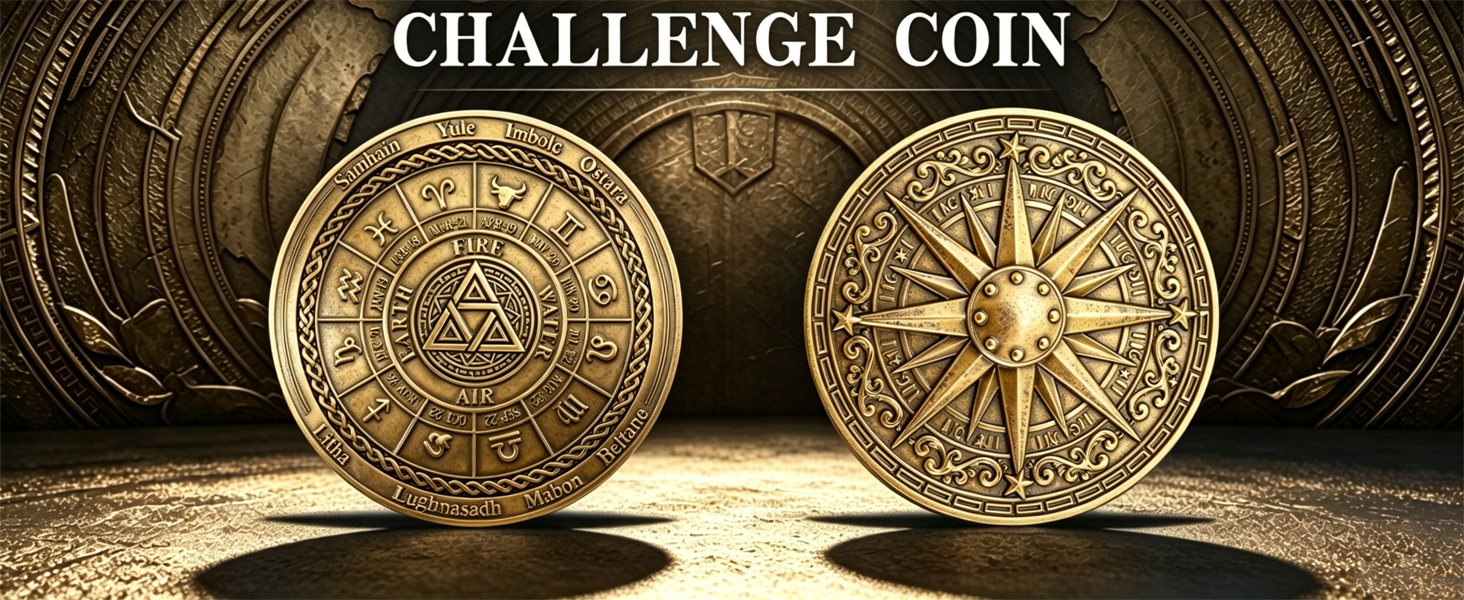
Challenge coins occupy a different emotional territory. Born in military tradition—often traced to World War I aviators—these coins are carried as proof of membership, camaraderie, and unit pride. The classic “challenge” goes like this: if you’re in a group and someone slaps a coin on the table, everyone else must produce their own. Those who can’t buy the next round. It’s a playful ritual, but it carries real weight. A challenge coin is a physical handshake, a badge you keep in your pocket.
“A challenge coin isn’t about rank. It’s about belonging. You earn it, you carry it, and you never leave it at home.”
Today, challenge coins have spread far beyond the armed forces. Police departments, fire stations, NASA teams, corporate boards, and even fan clubs issue their own. Designs range from sober and official to wildly creative—shaped like shields, bottle openers, or spinner coins with moving parts. Collectors trade them at conventions, and some rare editions fetch impressive prices. But their true value is rarely financial. They are memory anchors: a reminder of a deployment, a graduation, a tough project completed with a team that became family.
The unspoken rules of challenge coins
Unlike numismatic coins, challenge coins are meant to be handled. They live in pockets, not airtight slabs. Their wear and tear is part of the story. And while you can buy them online, the most meaningful ones are almost always given—not purchased. That distinction matters. It keeps the tradition honest.
Sobriety Coins: A Token of Recovery
Sobriety coins—sometimes called AA coins, recovery chips, or milestone medallions—are perhaps the most personal of all. They are given in Alcoholics Anonymous and similar recovery programs to mark periods of continuous sobriety: 24 hours, 30 days, 60 days, 90 days, six months, one year, and then yearly thereafter. The first coin is often the hardest earned. The one-year coin? It’s a quiet miracle you can hold.
These coins are not collectibles in the traditional sense. You don’t trade them. You don’t hunt for rare mint marks. But many people keep every single one, lined up in a drawer or displayed on a shelf. Each coin is a chapter. The 30-day chip might remind someone of sleepless nights and shaky hands. The five-year medallion might sit next to a photograph of a grandchild born during recovery. Sobriety coins are less about metal and more about meaning—a tangible “you are here” on a map that once felt impossible to navigate.
Design and symbolism vary widely. Many feature the Serenity Prayer, the AA triangle, or a simple “One Day at a Time.” Some are engraved with the recipient’s name and date. Others are deliberately plain—pocket-sized proof that progress doesn’t need fanfare. What matters is the ritual: standing up, walking to the front, and hearing a room full of strangers applaud a milestone they understand deeply.
Where the Three Worlds Overlap
Collectible coins, challenge coins, and sobriety coins rarely share the same display case. One is about history, one about brotherhood, one about healing. But look closer and the lines blur. A veteran might carry a challenge coin and a sobriety coin in the same pocket. A coin collector might stumble upon a military challenge coin at a flea market and keep it for its craftsmanship. A recovery group might commission a custom sobriety coin that looks as polished as any collectible.
What unites them is the act of keeping. In a world that increasingly lives on screens, these small objects demand to be touched. They sit in palms, jingle in pockets, and get passed from hand to hand. They are proof—of a hobby, a tribe, or a hard-won day. And that, perhaps, is the real collection: not the coins themselves, but the stories they hold.
So the next time you find a coin in your change, look twice. It might be worth a dollar. Or it might be worth a lifetime.